Allintitleunemployed Over 50 Fears Never Working Again
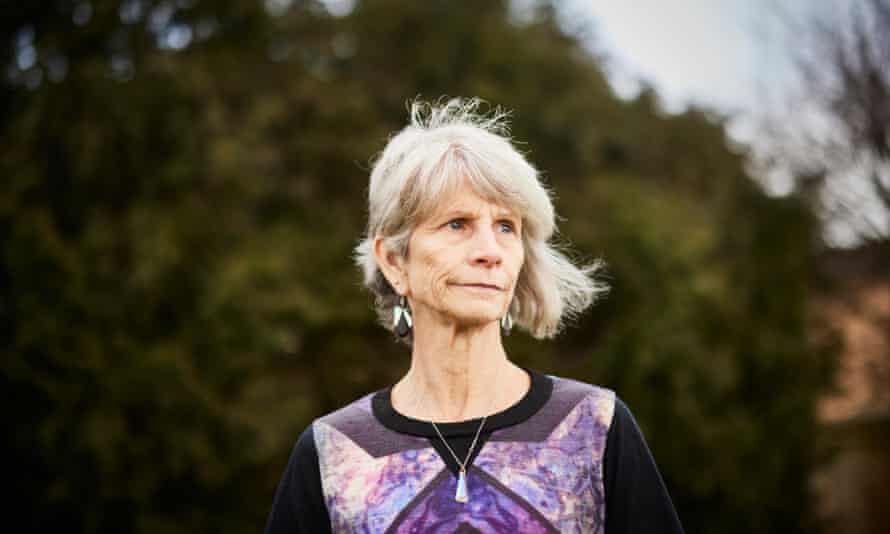
L isa Griffiths, a 61-year-old special needs nanny, has spent her career easily moving from one contract to the next. So when her last, 5-year contract ended recently, she was shocked to observe new employment opportunities far more limited than she had expected.
Then, while she was considering her options, the pandemic hitting and work dried upwardly altogether.
"Information technology's been a real shock for me, and my fear is that if this enforced unemployment is non just to do with the pandemic but my historic period as well – I accept no show that it is ageism only I have a strong feeling that it is – then things are going to become worse and not improve," she said.
"If I retire earlier than the state pension age and so my husband loses his job, it would exist a catastrophe," she added. "I know there are things like universal credit but we've never had to lean on government support before and I'grand not sure that my husband would fifty-fifty entertain the idea."
Since the Equality Act 2010 made information technology illegal to discriminate confronting someone based on historic period, employment rates amongst people aged l-plus have steadily risen. Before the pandemic, rates had reached a historic high, with a record 10.7 million people aged 50 and over in piece of work – nearly a third of the Britain workforce.
The story of older people and employment was largely one of those rare things: a good news story that brought almost everyone and everything with it, individuals, society and the economy alike.
This economic trajectory made anybody a winner, said Lily Parsey from the International Longevity Centre Great britain. "I common argument against greater labour marketplace participation in older age is that it will somehow prevent younger people from entering paid employment by taking all the jobs from them," she said.
This argument is, nevertheless, built on imitation assumptions: in March 2020, at least 80% of employment growth in the Great britain was estimated to come from workers over the age of fifty.
At that place were, of course, parts of the demographic untouched past the practiced news. Even before the pandemic, there were about 800,000 people aged 50-64 non in work, who wanted to be. More than 1 one thousand thousand 50-64s were out of work for wellness reasons, 300,000 of whom wanted a job.
Withal, things were going in the right direction. Merely and then the pandemic struck. It has been, of course, disastrous for neat swathes of workers across the board, peculiarly those aged eighteen-24, whose employment rate has fallen iii.5 percentage points (ppt) since March compared with just 0.4 ppt for those anile betwixt 35 and 49. For older workers, the drop in employment has been somewhere in the eye, at 1 ppt.
But cutting the data some other style – in terms of per centum increase of unemployment – and the age grouping nearly afflicted by the pandemic are those aged 50 or over. There are now 91,000 more unemployed older people than there were 12 months ago: an increase of a 3rd in a unmarried year, significantly more than in whatsoever other historic period grouping.
That tertiary is significantly more than both the national average increment of 24% and the 25% increment in unemployed people aged 18-24. For those aged 25-34, the increment was 28%, and for those aged 35-49, the increase was xix%.
That 3rd represents 407,000 individual stories of later on life unemployment, a group that now makes up one in four of all unemployed people in the UK.
This matters because despite the advances of the terminal decade, back-up is a particularly age-related problem: people anile over 50 who lose their jobs are significantly more likely to suffer long-term unemployment than other age groups, with older workers who lose their jobs existence more twice as likely as other historic period groups to be unemployed for at least two years.
Another worrying indicate, made past Dr Anna Dixon from the Centre for Ageing Better, is that the apparently good for you-ish employment charge per unit for those aged over 50 is masking something else: people who are on furlough, or who take had their hours cut, are still showing upwards in this data as "employed". But their chore may not exist rubber.
"Over the summer, furlough rates showed a U-shape, with younger and older workers the near likely to be away from work," said Dixon.
By September, nevertheless, furloughed 55-64s were the least likely to exist fully dorsum at work. "And then, while it superficially looks similar older workers will be '2nd-hardest' striking past job losses in this recession, once we factor in the fact that it is older workers who are at greatest risk of long-term unemployment, it is clear that after this pandemic there could be a lost generation of unemployed over-50s forced into an early retirement they neither desire nor can afford," said Dixon.
This, said Stuart Lewis, founder of Residue Less, the jobs site for the over-50s, is catastrophic for hundreds of thousands of older people. Reverse to popular conventionalities, he said, most fifty- and sixtysomethings are not revelling in their gold-plated, final salary pensions – a long-lost preserve of their parents' generation – and they oasis't had enough time nether pensions auto-enrolment to have amassed equivalent savings.
Instead, said Lewis, many face a significantly underfunded retirement and are seeing what savings they do accept decimated by the pandemic. This in turn will lead to a significant long-term drop in their future retirement income – and spending – which risks stalling the UK'southward economical recovery for years to come up.
"Those in their 50s and 60s are in a far more financially precarious position than most people imagine," he said. "It's tragic to think that more than than 626,000 over-50s are now challenge universal credit, meaning that after iii decades in the workplace, they accept less than £16,000 of savings to their proper name to authorize for universal credit.
"It'south also useful to reverberate that in the last recession women could retire at threescore and receive the country pension; today it's 66," he added. "This means that someone fabricated redundant at the age of 55 still has to find meaningful work, or try to survive on universal credit, for the adjacent 11 years before they can claim the land pension."
Anybody agrees that this isn't just a personal tragedy for the older generation, information technology'southward a trouble for united states all: harnessing the potential of workers, regardless of their age, will be crucial in the post-pandemic recovery. With an ageing population, we cannot afford to leave anyone behind.
Source: https://www.theguardian.com/business/2021/feb/04/lost-generation-unemployed-pandemic-hits-careers-of-over-50s
0 Response to "Allintitleunemployed Over 50 Fears Never Working Again"
Post a Comment